 Blaue Bioökonomie
AquaTrainVR – Learning and Experiencing
Virtual reality for specialised sectors
About the project
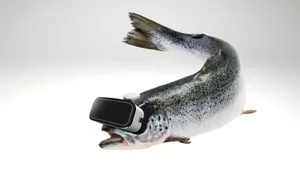
AquaTrainVR aims to develop immersive interactive learning modules using virtual reality (VR) technology. These are intended to impart practical knowledge on good professional practice, animal welfare and the latest scientific findings in aquaculture and the blue bioeconomy.
The project aims to improve public perception of the aquaculture sector. By providing virtual and interactive insights into production facilities and methods, information from the BaMS innovation area is to be made accessible and tangible for the public. This should increase social acceptance of modern production systems.
From a scientific point of view, the aim is to evaluate how VR-supported learning methods influence the training and further education of practical users. The advantages, limitations and obstacles to knowledge transfer in VR will be analysed. The project also aims to research the application of VR learning content in the scientific field.
In the economic-technical field, the focus is on the development of a utilisation plan and a pilot system for fish farming training. The project work is intended to clarify which topics and target groups are suitable for the commercial utilisation of VR learning content. The pilot system and the dual utilisation of the media created for public relations work in aquaculture operations provide a basis for the development of a commercial VR knowledge transfer system with multiple benefits.

AquaTrainVR – Learn and Experience
Virtual Reality for Aquaculture and the Blue Bioeconomy
Immersive learning for professionals and the public
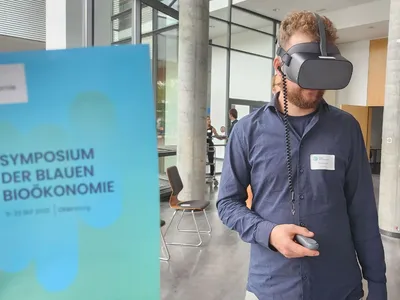
AquaTrainVR develops interactive learning modules based on virtual reality (VR) to clearly communicate knowledge on good professional practice, animal welfare and current scientific findings in aquaculture and the Blue Bioeconomy. The focus is on a practical learning experience: location-independent, interactive and immersive.
Creating transparency, strengthening acceptance
The virtual representation of modern aquaculture facilities makes modern production processes visible that have often remained hidden until now. This makes the topic more accessible to learners, career changers, retraining participants, professionals, decision-makers, students and interested citizens. The aim is to improve social acceptance of innovative production systems.
Research on the effectiveness of VR in education
The scientific part of the project examines how VR-based learning methods influence education and training. The advantages and limitations of digital knowledge transfer are a key focus, as is the transfer of knowledge between science and practice.
Economic benefits and pilot application
At the same time, a pilot system is being developed for fish farming training, which can also be used for public relations work. AquaTrainVR aims to create a viable model for commercial exploitation with multiple benefits for training, communication and research through immersive, VR-based learning content.
Virtual tours - example stations of the Blue Bioeconomy
Center for Aquaculture Research (ZAF)
The ZAF of the Alfred Wegener Institute offers flexible system solutions for the cultivation of marine and freshwater fish, shrimp, jellyfish and algae. The research facility enables adaptable studies on husbandry, nutrition and environmental impact in controlled environments with varying salinity levels.
HanseGarnelen GmbH
White Tiger shrimp were farmed here in a climate-neutrally heated recirculating aquaculture system. The seawater was prepared on site from drinking water and sea salt and reused by 99%. A flagship project for sustainable aquaculture made in Germany.
Sea & Sun Organic
In Trappenkamp, the company produces valuable astaxanthin from Haematococcus microalgae. From the algae strain culture to the finished product, everything is refined on site. The 5,000 m² pilot plant is an exemplary model for sustainable value creation from microalgae.
Algae Biotechnology Competence Center, Anhalt University of Applied Sciences
From bioplastics and cosmetics to pharmaceutical active ingredients, solutions from algae for a sustainable future are being developed here. In addition to applied research, the focus is on discovering new algae species, particularly for healthy food production.
Project Lead
Stefan-Andreas Johnigk